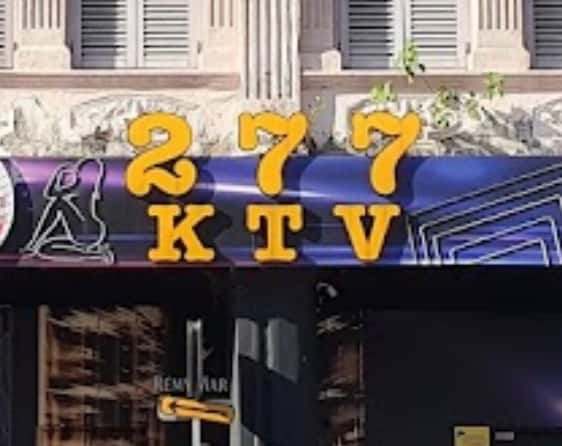
This guide explains what goes on a Singapore KTV bill in 2026: room minimum spends, beer towers and bottles, mixers, company and tips, service charge, GST and happy-hour sessions. Prices are as of October 2026.
A KTV lounge rents your group a private karaoke room and sells drinks by the tower or the bottle. Some lounges also offer paid company, where hostesses join the room for conversation, drinking games and karaoke. Police licensing conditions do not allow hostesses in a licensed venue without the licensing officer's written approval, so not every KTV offers company. Family karaoke chains, which charge for the room by the hour, do not. What is a KTV? describes how a night runs, and the Singapore KTV directory lists venues and their sessions.
How the bill is built
A hostess KTV bill has two parts that are usually settled separately: the drinks bill, which carries service charge and GST, and the tips for company and staff, which are commonly paid in cash.
| Item | How it is usually charged | What to ask |
|---|---|---|
| Room | A minimum spend on drinks, set by room size and session, or a room charge at some venues | What counts towards the minimum, and what happens if the group spends less |
| Beer towers | A price per tower; the size and brand are rarely published | The tower size, the brand and the price outside promotions |
| Bottles | Whisky, cognac and other spirits by the bottle | The price per bottle, and whether an unfinished bottle can be kept |
| Mixers and snacks | Included with a bottle at some venues and charged separately at others | Which mixers come with a bottle and what extras cost |
| Company | A tip for each hostess for each session, at rates the venue sets | Shared or booked, the rate, and what you owe if you end it early |
| Manager and waiter tips | Common at hostess venues; amounts vary | Whether they are expected here, and how much |
| Service charge and GST | Typically a 10% service charge, then 9% GST, on the drinks bill | Whether the menu prices already include them |
Published prices in October 2026
Few Singapore KTV lounges publish prices online. Two that did in October 2026 show how minimums and promotions are set. Neither website says whether the venue offers hostess company.
- One lounge sets room minimums in drinks, written as "1 tower / 1 bottle" for a room of up to two guests, "2 towers / 2 bottles" for up to four and "6 towers / 3 bottles" for up to six. Its suite for up to ten guests lists a minimum spend of S$888 / S$1,888. The page does not explain the slashes or say when each suite amount applies.
- The same lounge runs happy-hour offers between 4pm and 9pm, including the first beer tower free for groups of at least three and the first two towers from S$98.
- The other lounge lists a happy-hour beer tower at S$78. Its own pages disagree on whether happy hour starts at 3pm or 4pm.
Neither venue publishes tower sizes, bottle prices or mixer charges. One says only that its prices are subject to "prevailing charges"; the other says nothing about service charge or GST. Use figures like these to understand the structure, then ask your chosen venue for a written quote for your date. Singapore KTV FAQs lists what that quote should cover.
Service charge and GST
Venues that add a service charge typically set it at 10%. GST, charged at 9% since 1 January 2024, is then calculated on the subtotal including the service charge, so together they add 19.9% to the menu total. A S$400 drinks bill becomes S$440 with service charge and S$479.60 with GST.
Businesses registered for GST normally have to show prices that include it, and only registered businesses may charge it at all. Hotels and food and beverage outlets that add a service charge may instead show prices that exclude GST, as long as they display a prominent notice such as "Prices are subject to GST and service charge". When you see a notice like that and the service charge is 10%, add 19.9% to the menu price to estimate what you will pay. When you do not, ask whether the menu prices are final.
Service charge is the venue's own charge, not a tax, and whether you have to pay it depends on the price you agreed. Singapore's consumer protection law also treats charging substantially more than an estimate you were given as an unfair practice, unless you agreed to the higher price in advance. The Consumers Association of Singapore (CASE) takes complaints from consumers about businesses.
Sessions and happy hour
Hostess KTVs sell time in sessions. Older pages on this site show two common patterns: 4pm to 7pm, 7pm to 11pm and 11pm to 3am, or 5pm to 9pm and 9pm to 3am. Closing times are set by each venue's police licence, and many close at 3am, or 4am on Saturday nights and the nights before public holidays.
Happy hour is usually the cheapest time to drink. Older records on this site show lower room minimums and lower tips in happy hour than at night, and the published offers above run in the late afternoon and early evening. If company matters to you, ask whether hostesses will be working during happy hour before you book. Ask too what staying into the next session costs, because the minimum spend and the tips can change when a session ends.
Company and tips
Company is paid as tips under the venue's rules, usually in cash and separately from the drinks bill. Current tip rates are rarely published, so ask the manager who arranges your room, often called a mummy, for the rates for your session before anyone joins.
There are two arrangements. Shared company, often called butterflying, means a hostess divides the session between several rooms and returns to yours between visits. Booked company means she stays with your room for the session. Older records on this site put booked company at four to five times the shared rate. Decide which you want before choosing, and ask what you owe if you end either arrangement early.
Older records also list tips for the manager and for the waiters. Ask at the start whether these are expected at your venue and how much, rather than working it out when the bill arrives.
Paid company means conversation, drinking games and karaoke. Be courteous, do not touch staff, and accept a refusal without argument. How to choose a KTV hostess covers the conversation with the manager. The 2022 tipping guide records the rates reported then; treat those figures as history, not as a current tariff.
Paying the bill
- Ask for an itemised bill and check each line against what you ordered.
- Check that the service charge appears once, on the drinks subtotal, and that GST is then charged once on the total.
- Ask before putting tips on a card. If tips are added to the bill, service charge and GST may be charged on them as well.
- Pay tips in the way the manager agreed at the start of the night.
Keeping the bill predictable
- Message the venue before you go with the date, arrival time, number of guests and session, and ask for the room's minimum spend, what counts towards it and the current drinks prices.
- Ask whether mixers come with a bottle or are charged by the jug or can.
- Agree shared or booked company, and the tips involved, before anyone joins the room.
- Count the towers and bottles as they arrive, and ask whether you can keep an unfinished bottle for a later visit.
- Ask for the bill before the session ends if you plan to leave on time.
- Keep the written quote and compare it with the bill before paying.
Terms and acronyms explains labels such as HH and butterfly that appear in older listings.
What we checked: In October 2026 we checked the tax authority's GST and price-display guidance, Singapore's consumer protection law, police licensing conditions and the rates published on KTV venue websites, and found no current published tip rates. Prices and promotions change often, so get a written quote for your date.
Discussion
No discussion yet — been here recently? Share what changed.